Service · Jonesboro, AR
You probably don't think much about your walkway until something goes wrong with it. A paver starts to rock, one edge sinks lower than the other, or a puddle shows up in the same spot after every storm. A good walkway is mostly about the parts you can't see: a firm, compacted base and a slight slope that sends water off to the side. We build front walks and backyard paths with the same groundwork we use for paver patios and retaining walls, so they stay level and easy to walk on. Call (870) 876-2871 or ask for a free quote.
Tell us about your project and a local contractor will reach out to talk it through.
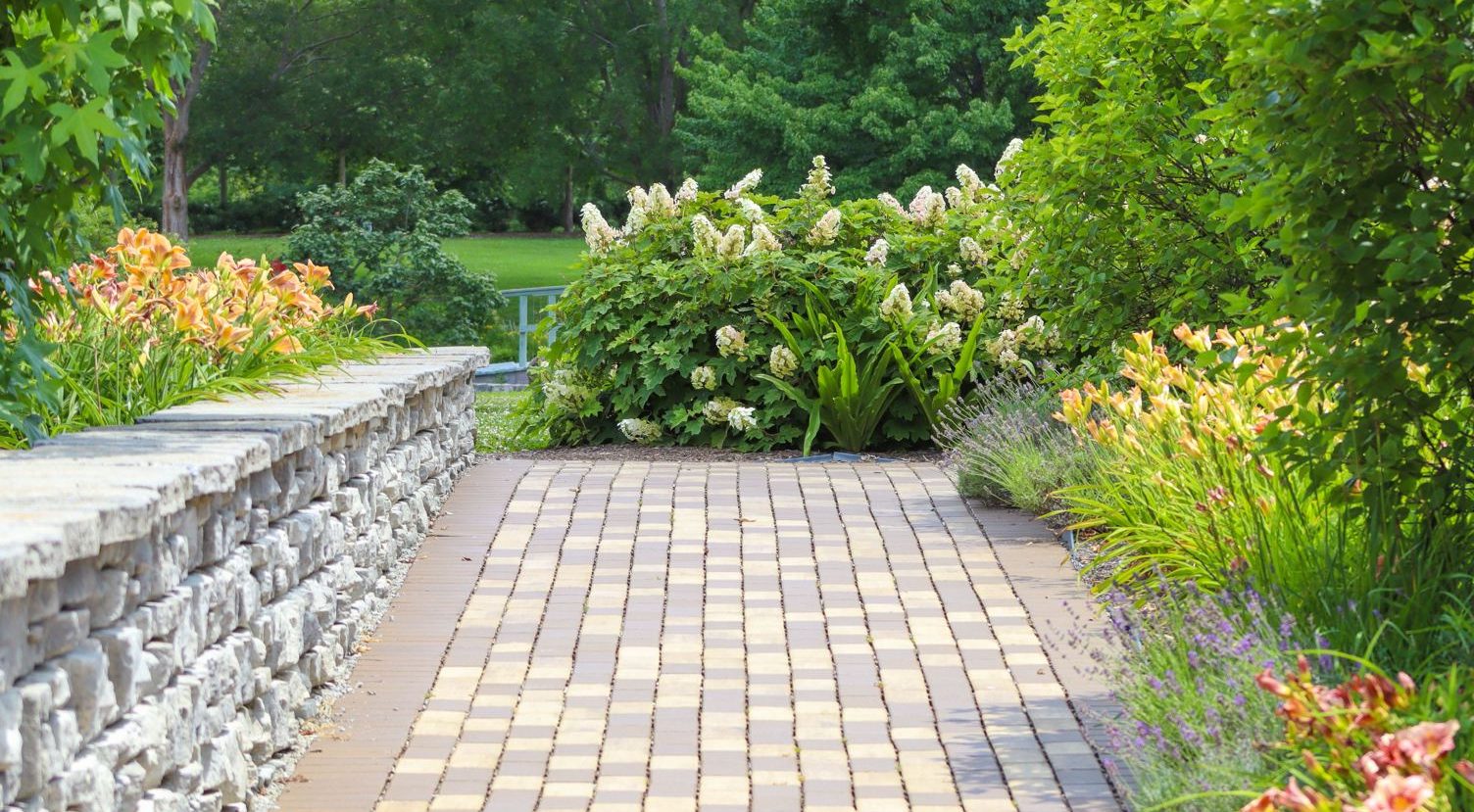
Photo: paver walkway alongside a stacked stone wall and planting bedsWhat goes wrong underneath
Homes on the ridge are often built on loess, a fine, silty soil that is firm enough when it's dry but turns soft and loses strength when it stays soaked. A walkway set on a skim of sand over that ground will settle wherever water lingers, which is how you end up with a path that dips in the middle or tilts toward the lawn. On the flatter lots around town, the issue is standing water. If the walkway is laid level with the yard or slightly below it, it becomes the low spot, and every rain leaves it wet or muddy.
The fix isn't complicated, but it does take time. We dig out the soft topsoil, install and compact a gravel base in layers, set the pavers or stone on a bedding layer, and lock the edges so nothing creeps outward. The surface gets a gentle cross-slope so water runs off to one side instead of collecting on the path or heading toward your foundation. If you'd like to plant along the edges, the University of Arkansas Division of Agriculture has helpful guidance on plants that do well in Arkansas yards.
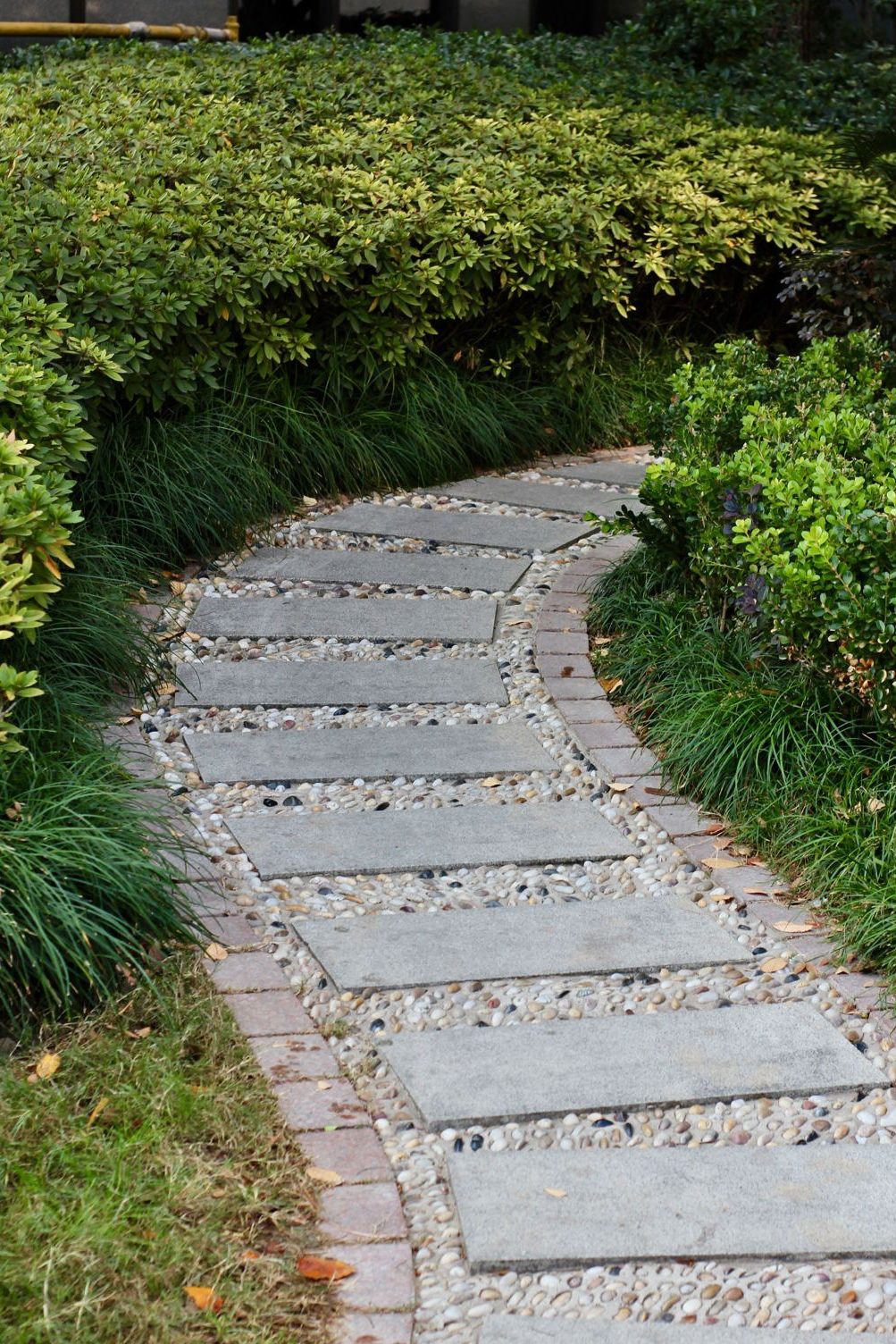
Photo: concrete stepping stones set in pebbles through a garden bedTypes of walkways
Planning the path
Start with how the walkway will be used. A front walk that guests use should be wide enough for two people side by side and should feel inviting from the street. A path to the garden or the back gate can be narrower and more casual. Next, think about the route people already take. Worn lines in the grass are a good hint about where a path belongs, and a walkway that fights that habit usually gets ignored.
Style comes after that. Straight lines and crisp borders look at home with traditional and modern houses, while a gentle curve in natural stone feels softer in a backyard full of plantings. Finally, we look at drainage: where the downspouts discharge, which way the yard slopes, and whether the walkway needs a gravel edge or a small drain so it doesn't trap water or send it toward the house.
Reasons people reach out
Timing
A walkway can go in most of the year, but the work goes best when the ground is dry enough to dig and compact properly. In Northeast Arkansas that often means late summer and fall, after the spring storm season and before winter brings freeze-thaw cycles. A path built then has a few months to settle before it faces heavy spring rain and daily foot traffic. If we've had a long wet stretch, we may push the start back a few days so the base isn't built on saturated soil.
We don't hand out a one-size plan. Before we suggest a material or a layout, we look at where people actually walk, how the yard drains, how the walkway meets your driveway, steps, or patio, and what will suit the style of the house. That way you get a path that stays flat and dry and looks like it was always part of the property. Whether you're in Jonesboro, Paragould, Brookland, Bono, or Bay, we're glad to talk it through.
Common questions
Usually because of what's under it. Pavers or stones set on a thin layer of sand or straight on the dirt have nothing firm to rest on, and Jonesboro's silty soil softens when it stays wet. Add a low spot where water collects and the path settles unevenly. Rebuilding on a compacted gravel base with the right slope is what fixes it for good.
A paver walkway is a continuous surface of interlocking units on a compacted base with edge restraint, so it's smooth, even, and easy to walk, roll a cart, or push a stroller on. A stepping-stone path uses separate stones set into gravel or grass. It has a more relaxed look and usually costs less, but it isn't as easy underfoot.
Often, yes. We can pick paver colors, natural stone, or a border detail that complements the brick, stone, or concrete already on your home, so the walkway looks like it belongs there.
Yes, but it has to be planned for. On flat lots we set the walkway slightly above the surrounding grade, pitch it to one side, and sometimes add a gravel trench or drain alongside it so water moves away instead of sitting on the path or running toward the house.
A short front walk is often finished in a day or two once work starts. Longer backyard paths, curves, steps, or extra drainage add time. Your quote will spell out the expected schedule, and weather can shift it.
It depends on the project. The City of Jonesboro requires a permit for work on your property that isn't maintenance or cosmetic, so the safest step is to check with Planning & Zoning before work starts. We can help you figure out what to ask them.
Ready when you are
You walk on it every day, so it should feel solid underfoot and drain the way it's supposed to. If you have an old path that has sunk or shifted, or you're ready for a proper walkway where the grass has worn thin, we'll come look at the space, go over layout and paver options, and give you a clear written quote. Call (870) 876-2871 Monday through Friday, or send us a few details with the button below.
Get a Free Walkway Quote